‘Partner with us’ – Future Africa interim director urges early-career researchers to join transdisciplinary research efforts
Opportunities for transdisciplinary research across Africa are burgeoning, as is the scope for intra-African research partnerships and collaborations, according to Professor Wanda Markotter, Interim Director of the University of Pretoria’s (UP) Future Africa research platform.
“Partnerships are really important for us, and you are part of that – partner with us,” she said, addressing 22 early-career researchers from 10 African countries who gathered on the Future Africa campus from 24 to 28 August for the Future Africa Research Leadership Fellowship (FAR-LeaF) programme workshop.
This is the second cohort to participate in the programme, a two-year fellowship funded by the Andrew Carnegie Foundation to develop early-career African scientists into global research leaders. The fellows are from Benin, Botswana, Ghana, Ethiopia, Kenya, Malawi, Nigeria, South Africa, Tanzania and Zimbabwe, representing a geographical spread wide enough to give substance to the programme’s aspirations for pan-African partnerships and collaborations.
“Future Africa is known for taking transdisciplinary research to the next level, across faculties and across society on a really large scale,” said Prof Markotter, who outlined a range of Future Africa-driven research opportunities of potential interest to FAR-LeaF fellows.
These opportunities include research on preparing for and preventing pandemics, developing new approaches to working with communities around national parks, and tracking progress on health and climate change.
From preventing pandemics to predicting climate health trends
Elaborating on some of these opportunities, Prof Markotter referred to the newly established Department of Science, Technology and Innovation-National Research Foundation Institute for the Preparedness and Prevention of Pandemics, comprising 10 South African universities.
“The idea is to move into Africa, so there will be opportunities across the continent to get involved.”
UP is a key player in this new institute, known as IP3, thanks to its African and global expertise in One Health, which connects human, animal and environmental health disciplines to address global challenges such as zoonotic diseases.
“We have the only veterinary faculty in the country, so we are very well positioned in terms of the prevention of spillover in zoonotic diseases,” said Prof Markotter, who holds the One Health Chair at UP.
Partnerships across Africa are also needed for the two flagship programmes of the new Future Africa Chair in Climate-Water-Food Nexus, which started operating on 1 August this year. The two flagships are the Lancet Countdown and the United Nations University Hub, both hosted at Future Africa.
The Lancet Countdown gathers and analyses scientific data for climate health predictions. European indicators are not relevant to Africa, hence the need for African-generated data, Prof Markotter said. The United Nations University Hub was established at UP in July 2025 and is the only one of its kind on the continent. Known as REACH-Africa, it will lead on climate, water, health and food security across the continent and beyond.
Another transdisciplinary research opportunity, under the auspices of Future Africa’s Sustainability Transformations Chair, is to develop new approaches to working with communities around national parks across Africa.
“The authorities have reached out to academics to help inform new approaches to communities so that they really benefit,” Prof Markotter said, noting high levels of instability in the current relationships between national parks and communities.
Building trust and making science accessible
UP Vice-Chancellor and Principal Prof Francis Petersen, who opened the five-day FAR-LeaF II workshop, noted that 500 applications had been received for 22 places.
After offering an overview of the University’s new strategy, UP Thrive 2038, he highlighted the importance of building trust between researchers and communities, and exploring how communities could be part of the research. He also emphasised the importance of making science accessible to the public through storytelling – “a scientific form of storytelling” that combines facts and evidence with engaging narratives.
For the rest of the week, the FAR-LeaF II participants took part in a full programme of presentations, discussions and dialogues, with each day ushering in a theme relevant to research leadership, including education, gender, technology, climate resilience and food security. The fellows also met with their UP mentors and connected with one another and the FAR-LeaF team, led by the Director of the programme, Prof Stephanie Burton
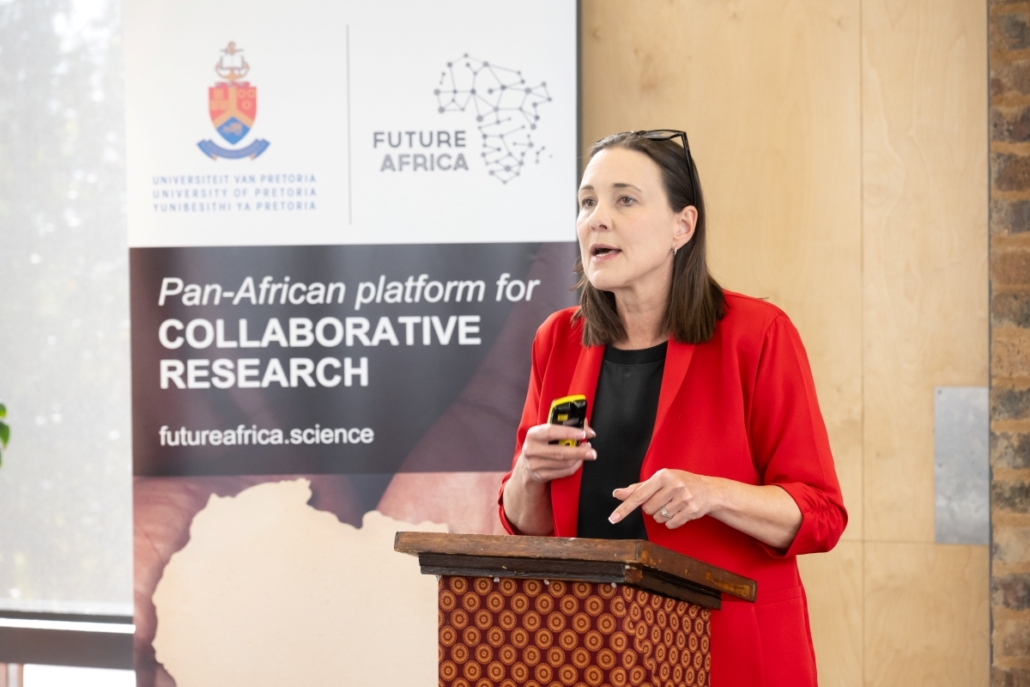
Prof Wanda Markotter
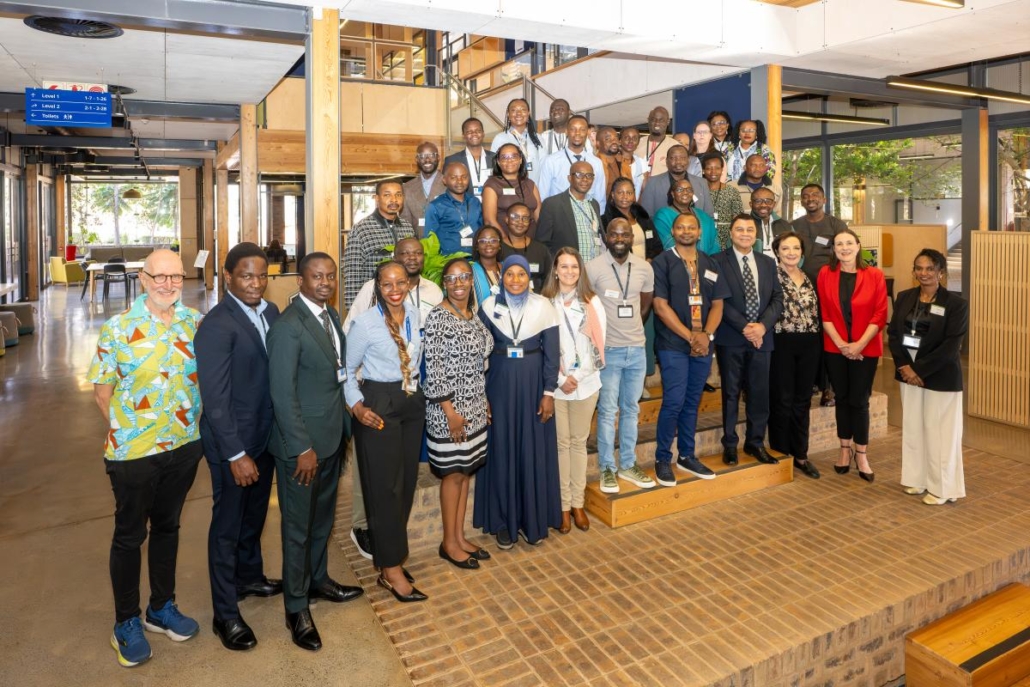
FAR-LeaF Fellows with University of Pretoria leaders