You are here: Home1 / Challenge Domains2 / One Health3 / Promoting AI-powered language inclusivity in rabies education
Promoting AI-powered language inclusivity in rabies education
Researchers from the Future Africa Research Chair in Health, People and Places (One Health) and the Department of Computer Science at the University of Pretoria (UP) piloted an AI chatbot that delivers rabies awareness information in Sepedi, addressing a gap in public health communication: most guidance in South Africa is available only in English. The project fine-tuned existing AI models (OpenAI’s GPT-4o and Google’s Gemini 1.5 Flash) using validated, culturally appropriate Sepedi content on rabies. The models were assessed for linguistic accuracy, cultural relevance and scientific reliability, with the aim of improving access to public health information in African languages. Read more
Where the project stands now
The Future Africa Research Chair in Health, People and Places (One Health) is continuing its collaboration with the Absa Chair of Data Science to explore how artificial intelligence (AI) can make public health information more accessible in local languages. The collaboration builds on earlier research that used rabies as a pilot to explore whether large language models, including OpenAI’s ChatGPT and Google’s Gemini, could provide reliable health information in Sepedi. The research looked at linguistic accuracy, cultural relevance and scientific reliability, with the aim of improving access to public health information in African languages.
This year, the project has been taken a step further through collaboration with UP’s Department of African Languages. Human language experts are being brought into the process to validate the language used, while the team has also developed a chatbot that allows users to interact with the health information.
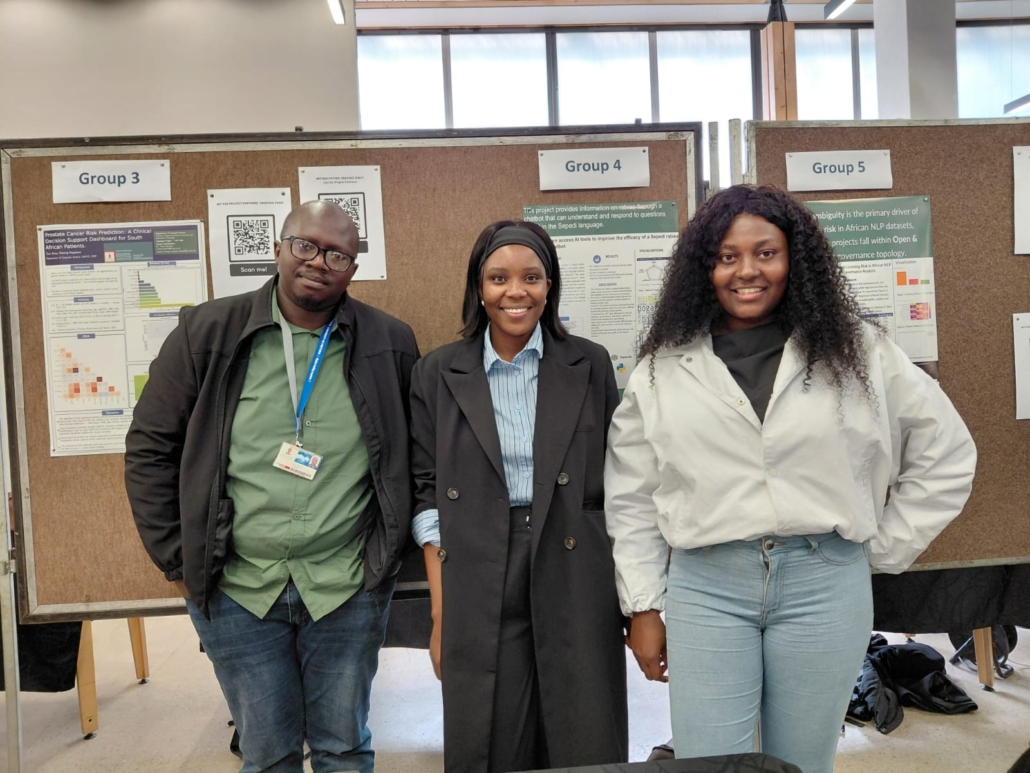
Master of Information Technology (MIT) students Muphulusi and Nhlanhla, who worked on the project, presented a poster on their work to peers and reviewers at an event held at Future Africa in May 2026.
The work is available on GitHub, with plans to further refine the research and publish the findings in an open-access journal. The team also hopes to secure funding to scale up the project and make the chatbot available to a wider public.
The project brings together expertise in One Health, data science and African languages to explore how AI can support more inclusive access to public health information.