You are here: Home1 / Challenge Domains2 / One Health3 / Understanding One Health in practice through the work of UP emerging r...
Understanding One Health in practice through the work of UP emerging researchers
What does it mean to put the One Health approach into practice when addressing complex health challenges such as antimicrobial resistance? It means looking beyond individual health concerns to understand how people, animals and the environment are interconnected, and how activities within one system may affect the others. In livestock farming, where people interact closely with animals and their surrounding environment, this approach allows researchers to investigate antimicrobial resistance across these interconnected systems, rather than examining human, animal and environmental health separately.
Two master’s students from the University of Pretoria’s (UP’s) Faculty of Veterinary Science are applying this approach through separate but complementary studies on livestock farms in Gauteng.
Phumudzo Mulaudzi and Sisanda Ziphe are investigating antimicrobial resistance (AMR), a global health concern with implications for human and animal health, food production and the environment. Mulaudzi’s research focuses on cattle, farmworkers and water sources, while Ziphe’s examines poultry, farmworkers, water sources and feed.
By examining these different components of livestock farming, the students aim to contribute to a better understanding of AMR and provide knowledge that could inform improved farming practices.
Their research is being highlighted by Future Africa following International One Health Day on 3 November 2026, as part of its efforts to raise awareness around the practical value of One Health. The approach is central to Future Africa’s Research Chair in Health, People and Place (One Health), which promotes an integrated understanding of human, animal and environmental health.
Taking One Health beyond scientific research
While their research focuses on antimicrobial resistance, the students’ experiences in the field have also highlighted the importance of engaging with farming communities and improving awareness of health risks.
During their fieldwork, both researchers were surprised by the limited awareness of antimicrobial resistance among some farmers. Several farm owners were unfamiliar with the potential dangers of AMR and its implications for human, animal and environmental health.
“I wish people would understand the link between the environment, humans and animals,” said Mulaudzi, who believes that understanding these connections could encourage better hygiene and safer animal-handling practices, both on farms and in households.
Their experiences highlighted an important consideration in applying One Health: understanding health challenges through research is only part of the process. Making scientific knowledge accessible to the people who can use it is equally important.
Both students believe that publishing scientific articles alone is not enough to address the knowledge gaps they encountered. Their research projects incorporate multilingual information to communicate with farmers who may not understand English. The students also identified awareness campaigns, educational initiatives and practical workshops as ways to improve understanding of AMR.
“I really think we should invest in spreading awareness and invest in campaigns,” said Ziphe, who suggested introducing AMR awareness initiatives in schools to help young people understand the issue from an early age.
Mulaudzi also proposed workshops for farmers, animal owners and households focusing on animal handling, water management and environmental hygiene.
Connecting research with communities
The students’ work illustrates how the One Health approach can be applied to investigate health challenges that extend across people, animals and the environment. Their fieldwork also highlights the importance of considering the knowledge and practices of the communities involved.
For both researchers, the experience has reinforced the need to take scientific knowledge beyond academia and make it accessible to those who can put it into practice.
Their research provides an example of how emerging researchers can contribute to One Health by investigating interconnected health challenges while recognising the importance of community awareness and engagement in addressing them.
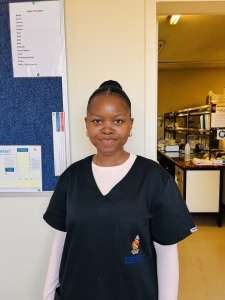
Sisanda Ziphe
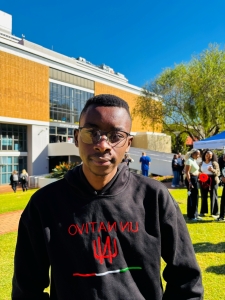
Phumudzo Mulaudzi