New Future Africa research chair brings climate, water and food research together
The University of Pretoria (UP) has launched a five-year research chair that will bring researchers across disciplines together to tackle the links between climate change, water security and food security in Africa.
Led by Professor Tafadzwanashe Mabhaudhi, whose research focuses on climate change, food and nutrition security, water security, and sustainable development, the Future Africa Research Chair in Climate, Water and Food Nexus will strengthen collaboration across disciplines and sectors.
“Essentially, it’s about understanding how different systems connect to each other and how challenges in one system can easily transfer to the other,” Prof Mabhaudhi said.
Speaking at the launch event, UP Vice-Chancellor and Principal Prof Francis Petersen said the research chair represented an investment in research leadership, postgraduate development, strategic partnerships and knowledge that could contribute to tackling complex challenges facing Africa.
“Today’s challenges are increasingly interconnected,” he said. “Climate change, water security, sustainable food systems, environmental sustainability and human health can no longer be understood in isolation.”
The nexus approach recognises that a challenge in one area can have consequences elsewhere. Drought, for example, can reduce water availability and agricultural production, with wider implications for food security, livelihoods and access to nutritious food.
Climate change is also placing increasing pressure on these systems through droughts, floods, heatwaves and wildfires. The effects can extend beyond farms and water resources, affecting household incomes, health and livelihoods.
Prof Mabhaudhi said understanding these links was important when planning interventions and making decisions that could affect different sectors.
“Part of it is understanding those interconnections when you’re planning, so that you don’t just sit with climate people when you’re planning for climate,” he said.
The chair will bring researchers from across UP’s faculties into projects from the outset, allowing different areas of expertise to inform research questions, methods and possible solutions.
For example, decisions about water infrastructure can affect agriculture, health and surrounding communities. Considering these connections early can help researchers and decision-makers identify potential trade-offs and avoid creating new problems while addressing existing ones.
“To put it simply, the thinking behind the nexus is this: don’t go creating problems for other people,” Prof Mabhaudhi said. “And the best way not to create problems for other people is to involve them from the word go.”
The approach supports the University’s Thrive UP 2038 institutional strategy, which emphasises transdisciplinary research, collaboration and societal impact in responding to complex challenges.
“Research chairs are important because they bring together researchers across disciplines, institutions and sectors to co-create transformative research that is essential for addressing the challenges facing Africa,” said Prof Wanda Markotter, Interim Director of Future Africa at UP.
She added that the chair would also create opportunities for collaboration among researchers, policymakers, government, civil society, industry and other stakeholders, while supporting the development of the next generation of researchers.
For Prof Petersen, the chair reflects the emphasis of Thrive UP 2038 on bringing different forms of expertise together to address shared societal priorities. He also highlighted Future Africa’s role in connecting researchers, policymakers and institutions across Africa with partners around the world, adding that Africa should be recognised not only for the challenges it faces, but also for its capacity to develop innovative solutions.
“Africa is not simply a place where these challenges are experienced,” Prof Petersen said. “It’s a place where solutions are being developed, where innovation is flourishing, and where new models of research and collaboration are emerging.”
Prof Mabhaudhi said the research chair builds on work already underway at UP to strengthen nexus thinking and sustainability transitions within the University’s research priorities.
“We’ve got people from outside South Africa, from all over the continent,” Prof Mabhaudhi said. “The actual work has always been happening behind the scenes.”
This article was originally published on the University of Pretoria website.
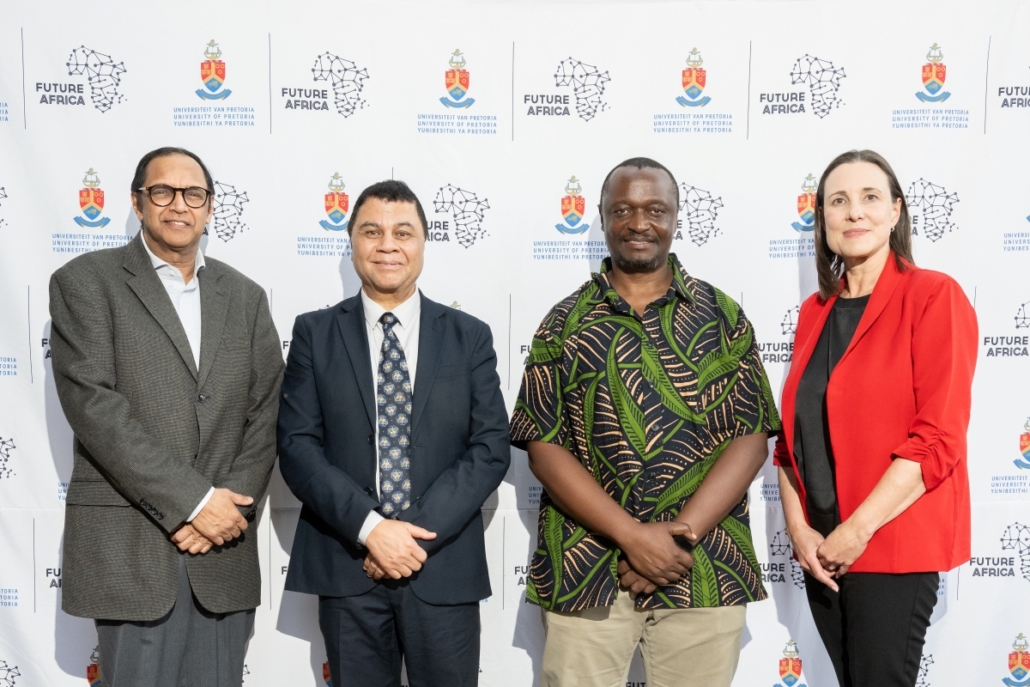
Prof Sunil Maharaj, Prof Francis Petersen, Prof Tafadzwanashe Mabhaudhi and Prof Wanda Markotter
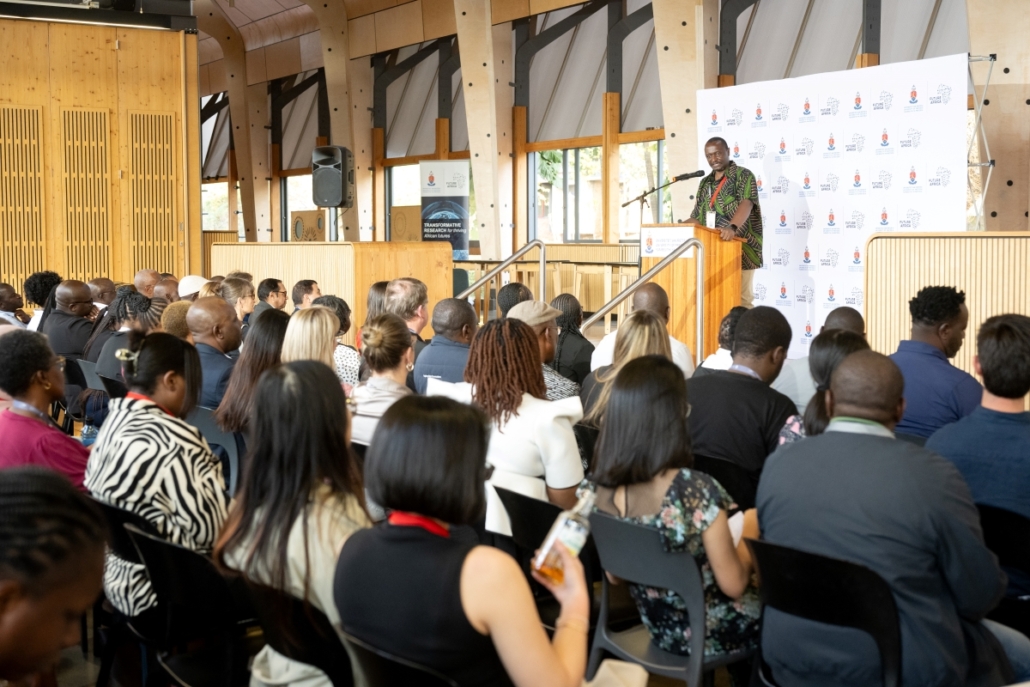
Prof Tafadzwanashe Mabhaudhi, Chairholder of the New Future Africa Research Chair in Climate, Water and Food Nexus