UNU Hub REACH-AFRICA contributes to digital agriculture and AI policy brief for climate resilience in Zimbabwe
The United Nations University Hub on Resilient Environment, Agriculture, Climate and Health for Africa (REACH-AFRICA) hosted at Future Africa at the University of Pretoria is proud to have contributed to the development and release of a timely policy brief on Digital Agriculture and AI for Climate-Resilient Smallholder Farming in Zimbabwe, co-authored by Professor Tafadzwanashe Mabhaudhi, Executive Director of REACH-AFRICA.
The brief highlights how digital technologies, such as mobile-based advisory services, climate information systems and digital financial tools, can significantly strengthen smallholder farming systems by improving access to information, reducing transaction costs, and enabling better risk management and decision-making.
In addition, it identifies critical structural barriers, including limited connectivity, low digital literacy, infrastructure gaps and affordability constraints, which must be addressed to ensure inclusive and equitable digital transformation.
The findings emphasise that when digital agriculture interventions are embedded within supportive institutional frameworks and paired with capacity building, they can deliver measurable benefits in productivity, market access, financial inclusion and climate resilience among smallholder farmers.
The policy brief was launched on 9 March 2026 at a high-level science-policy dialogue in Harare, Zimbabwe, convened by the United Nations University Institute for Water, Environment and Health (UNU-INWEH). The event brought together key stakeholders, including H.E. Adler Aristilde, Ambassador of Canada to Zimbabwe and Prof Obert Jiri, Permanent Secretary in Zimbabwe’s Ministry of Lands, Agriculture, Fisheries, Water and Rural Development.
The brief’s co-authors include Prof Jiri and Dr Anxious Masuka, the Minister of Lands, Agriculture, Fisheries, Water and Rural Development in Zimbabwe, reflecting strong alignment between scientific evidence and national policy leadership.
Developed in collaboration with partners including the United Nations University Institute for Water, Environment and Health (UNU-INWEH) and the International Water Management Institute (IWMI), the brief represents a strong example of the UNU REACH partnership in action.
UNU REACH-AFRICA is actively advancing transdisciplinary, policy-engaged research that bridges science and implementation. The policy recommendations, such as expanding rural digital infrastructure, strengthening digital literacy and skills, promoting inclusive and gender-responsive innovation, and leveraging public-private partnerships, provide a clear roadmap for scaling digital agriculture in Zimbabwe.
Together, these efforts position UNU REACH-AFRICA as a catalyst for evidence-informed policy and sustainable, climate-resilient development across the continent.
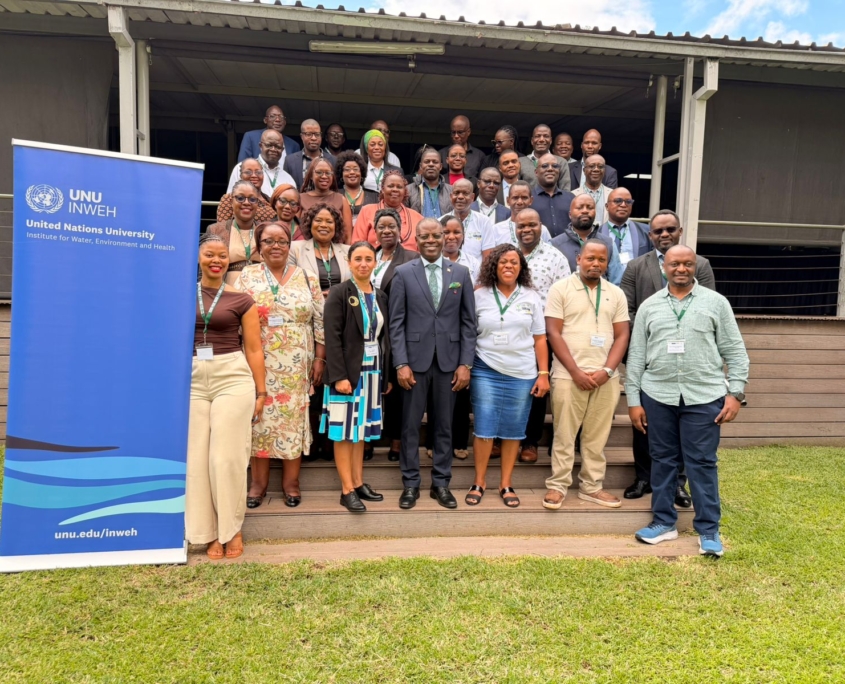
Participants at the two-day science dialogue in Harare (Photo credit: UNU-INWEH)