UP’s Future Africa and IRD-CNRS-CIRAD spotlight Bolt’s Farm fossils in new seminar series
Future Africa at the University of Pretoria, in partnership with the Institut de Recherche pour le Développement (IRD), the French National Centre for Scientific Research (CNRS) and the French Agricultural Research Centre for International Development (CIRAD) Joint Office in Southern Africa, hosted the first seminar in its Science Sharing Series, focusing on palaeontological research at Bolt’s Farm in the Cradle of Humankind.
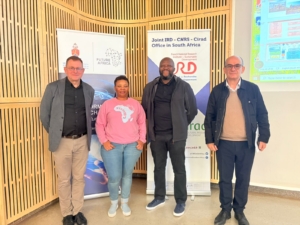
The seminar, titled “The Kingdom of Fossil Big Cats and Monkeys”, brought together three experts in palaeontology: Dr Dominique Gommery, Research Director at the French National Centre for Scientific Research and Deputy Director of the Paris Palaeontology Laboratory; Mr Lazarus Kgasi, Assistant Curator in the Plio-Pleistocene Palaeontology Section at the Ditsong National Museum of Natural History; and Dr Nonhlanhla Vilakazi, palaeontologist and Associate Professor in the Department of Zoology at the University of Johannesburg.
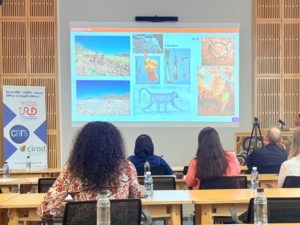
The speakers shared insights from ongoing excavations at Bolt’s Farm and discussed the site’s significance for understanding past environments and biodiversity.
Unlike many other sites in the Cradle of Humankind, Bolt’s Farm contains fossil deposits of different ages, dating from approximately 4.5 million to 900,000 years ago. This allows researchers to examine how biodiversity, environmental conditions and species changed over time.
The site contains a wide range of fossils, including primates, carnivores and smaller animals. These fossils help researchers reconstruct past environments. The presence of species such as pigs and frog’s points to water sources, while microfauna such as rodents and reptiles indicate ecological conditions.
During the seminar, the speakers outlined how palaeontological research is carried out, from excavation and fossil preparation to the analysis of material collected both in situ and from historical mining deposits. Revisiting older material, together with new excavations, improves understanding of the site and its context.
New technologies are supporting this work. Researchers use photogrammetry, drone imaging and micro-CT scanning to document sites and analyse fossils without damaging them. These methods allow for a more detailed study and preserve fragile material for future research.
The seminar was opened by Professor Wanda Markotter, Interim Director of Future Africa, and Dr Laurent Vidal, Director of the IRD-CNRS-CIRAD Joint Office, who spoke about the importance of collaboration in advancing research and knowledge exchange.
Research at Bolt’s Farm reflects sustained collaboration between South African and international partners, combining expertise in palaeontology, geology and related disciplines. The Franco-South African partnership in palaeontology, which marked 30 years in 2025, continues to support excavation programmes, knowledge exchange and research capacity across institutions.
The speakers also noted the role of local communities in supporting fieldwork and protecting heritage resources. Community members assist with field activities and are introduced to fossil identification. Initiatives such as exhibitions at the Ditsong National Museum of Natural History are also helping young South Africans and nearby communities engage with the country’s palaeontological heritage.