You are here: Home1 / Uncategorized2 / Dr Hauwa Mohammed Sani on leadership and resilience in science
Dr Hauwa Mohammed Sani on leadership and resilience in science
Future Africa at the University of Pretoria joins the global community in marking the International Day of Women and Girls in Science on 11 February. The day recognises women’s and girls’ contributions to science and the importance of gender equality in advancing scientific progress. To mark the day, we spoke to women researchers affiliated with the platform whose work supports African-led responses to complex challenges. We thank the researchers for sharing their experiences and insights.
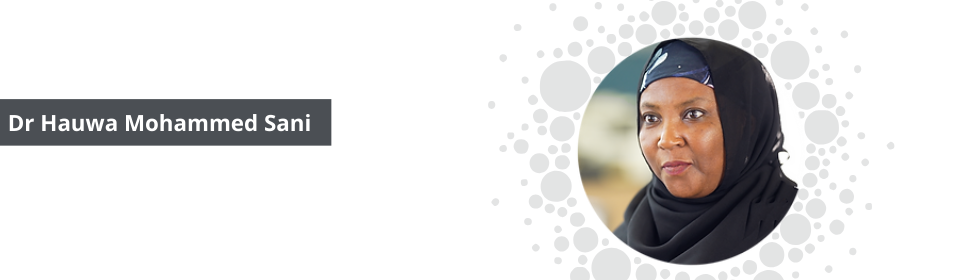
Dr Hauwa Mohammed Sani is the Deputy Director of the Institute for Development, Research and Training at Ahmadu Bello University in Nigeria. A sociolinguist specialising in language and communication, her PhD examined news reportage. Dr Sani is an alumna of the Future Africa Research Leadership Fellowship (FAR-LeaF) programme at the University of Pretoria.
What has been the most significant challenge you have faced as a woman in science?
The greatest challenge has been navigating a patriarchal society where a woman’s pursuit of high-level research is often viewed as deviating from the norm. Balancing the rigorous demands of field research and leadership with the responsibilities of home and family requires resilience and mental strength. Challenging the stereotype that a woman cannot be both a committed family member and a leading scientist has been a continuous, yet necessary, journey.
What kind of support has helped you navigate your journey?
Personal resilience and professional validation have been critical. Being part of the Future Africa Research Leadership Fellowship (FAR-LeaF) network created a sense of belonging that extends beyond local biases. Receiving the 2025 Outstanding Staff Award at Ahmadu Bello University affirmed that excellence could flourish, even when one works against deeply rooted expectations.
How has the FAR-LeaF programme influenced your journey?
FAR-LeaF transformed me into a transdisciplinary leader. It gave me the academic confidence to address COVID-19 misinformation in Northern Nigeria by integrating scientific evidence with social context. The programme also prepared me to take on leadership roles that bridge research and meaningful societal impact.
What message would you share with girls and young women interested in science?
Your dreams are valid. Science is a powerful tool for empowerment. By pursuing it, you gain not only a career, but also a platform to solve problems in your community and to demonstrate that African women can lead at the highest levels of intellectual inquiry.
If you were to imagine a future Africa headline, what would it say about an Africa where women and girls lead in science?
It is an Africa where norms are redefined to include everyone, where women lead the fight against misinformation and where institutions are strengthened through inclusive, evidence-based leadership.