You are here: Home1 / Uncategorized2 / Dr Tafadzwa C. Maramura on confidence and mentorship in science
Dr Tafadzwa C. Maramura on confidence and mentorship in science
Future Africa at the University of Pretoria joins the global community in marking the International Day of Women and Girls in Science on 11 February. The day recognises women’s and girls’ contributions to science and the importance of gender equality in advancing scientific progress. To mark the day, we spoke to women researchers affiliated with the platform whose work supports African-led responses to complex challenges. We thank the researchers for sharing their experiences and insights.
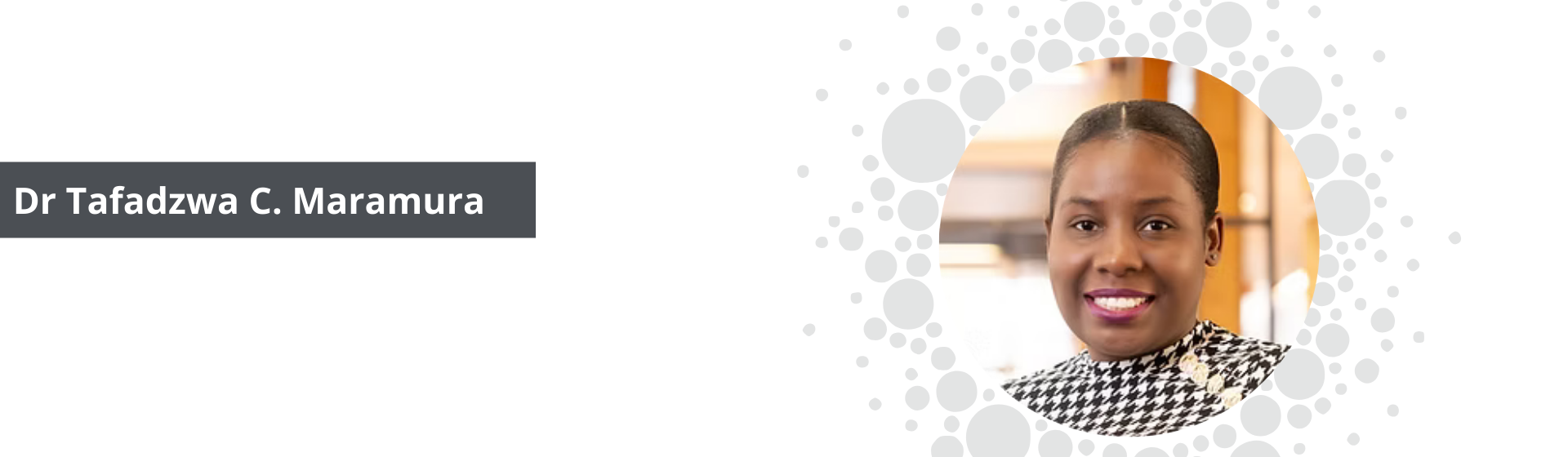
Dr Tafadzwa Clementine Maramura is an Associate Professor at the University of Namibia and a Research Fellow in the Future Africa Research Leadership Fellowship programme at the University of Pretoria. She holds a PhD in Public Management and Water Governance from North-West University and is a Brightest Young Minds in Africa alumna (2017).
What has been the most significant challenge you have faced as a woman in science?
The most significant challenge has been balancing rigorous academic demands with imposter syndrome. At times, you realise that the greatest obstacle is yourself. When you limit your potential by thinking you are not old enough, not “man” enough, or simply not good enough. But girls can do it too.
What kind of support has helped you navigate your journey as a woman researcher?
Mentorship from senior colleagues across the different spaces in which I work has guided and shaped my thinking as a female researcher. As the saying goes, you can only dream of what you have seen. I have also benefited from peer networks of African women scholars who have offered both emotional and strategic support. The women around me have played a significant role in shaping who I am today. A special shout-out to my mom, too, “Chilli Gogo.”
How has being part of the Future Africa Leadership Fellowship (FAR-LeaF) programme influenced your journey as a woman in science?
As a water governance researcher, FAR-LeaF has amplified my voice in sustainability research and connected me to collaborative opportunities focused on climate-resilient socio-dynamics. It has empowered me to lead an interdisciplinary project and strengthened my confidence to mentor the next generation of African women leaders. As they say, the future is female.
What advice would you give to young women considering a career in research or science?
Embrace persistence. Rome was not built in a day, so do not give up in a day either. Try to build diverse networks early, seek mentors, publish boldly, and integrate your unique perspectives into your research themes. Remember, resilience turns obstacles into opportunities for innovation.
What message would you share with girls or young women who are interested in science?
Your curiosity is your superpower. Do not ignore that instinct; curiosity may have “killed the cat,” but it also drives discovery. Pursue your science fearlessly, knowing that Africa needs your insights. Surround yourself with people who recognise and celebrate your potential.
What does a future Africa look like when women and girls lead in science?
A future Africa thrives when women and girls lead in science, driving sustainable change through inclusive leadership that ensures no one is left behind.