You are here: Home1 / Challenge Domains2 / Sustainability Transformations in Africa3 / Negotiating sustainable development: Six key reflections from the Future...
Negotiating sustainable development: Six key reflections from the Future Africa roundtable
What does it mean for Africa to negotiate sustainable development on its own terms? How can the continent balance climate commitments, energy access, economic development and justice in a changing global landscape?
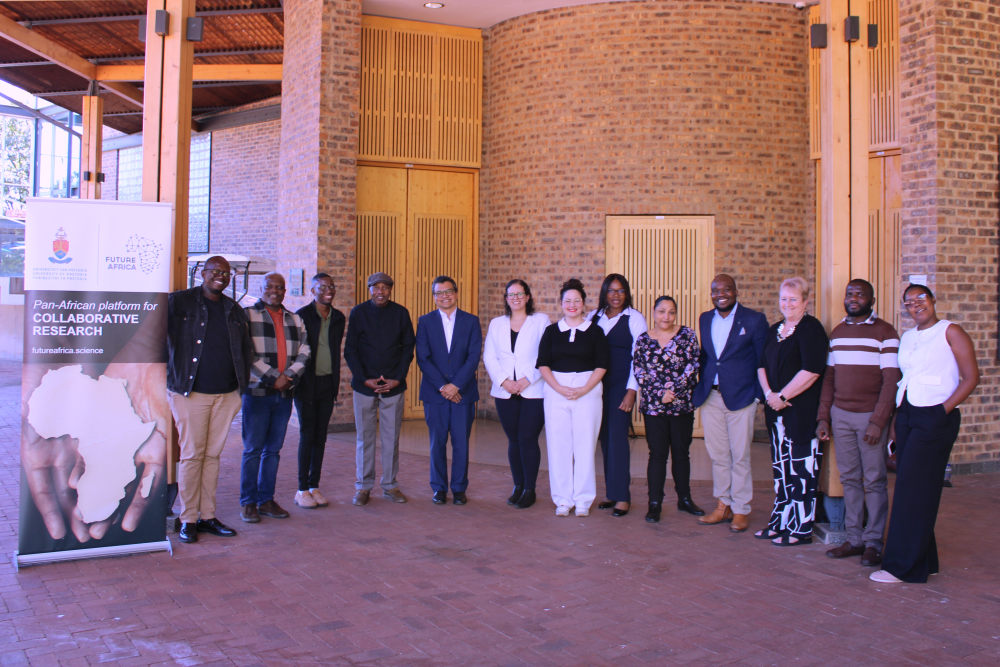
These questions shaped discussions during a roundtable on Tuesday, 28 April 2026, hosted by Future Africa at the University of Pretoria (UP) under the Africa–Europe Cluster of Research Excellence on the Politics of Sustainable Development, co-led by Future Africa and the University of Oslo.
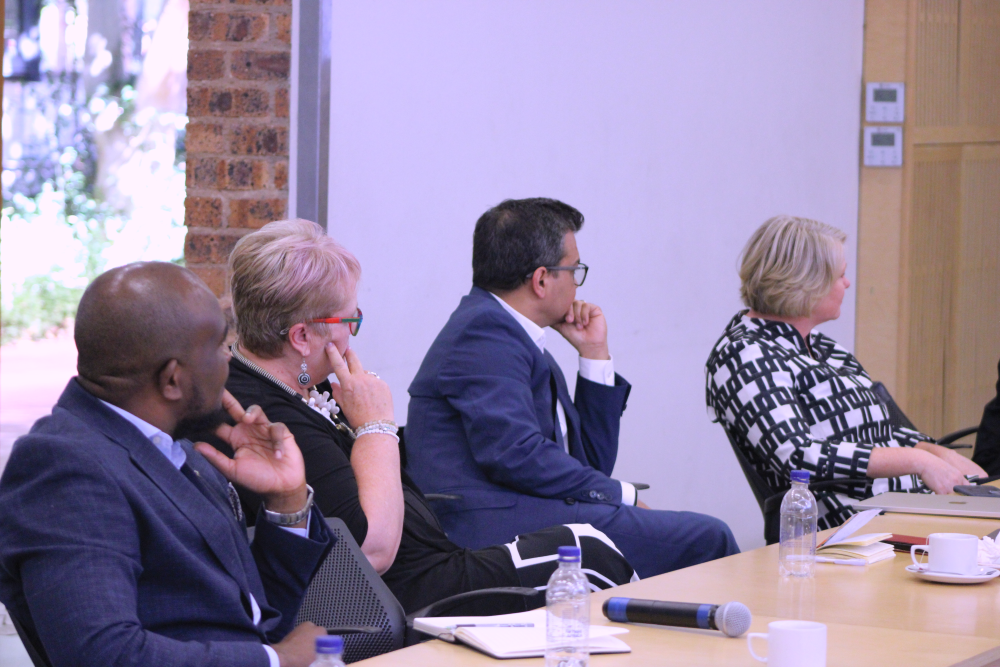
The roundtable, titled Negotiating Sustainable Development: African Perspectives on Global Governance and Just Transitions, brought together academics, practitioners, and international partners to discuss how African actors are engaging with debates on sustainable development amid geopolitical fragmentation, institutional inequality, and intensifying climate pressures.
The session opened with reflections from Her Excellency Anne Kristiansen, Norway’s Ambassador to South Africa, and Professor Maano Ramutsindela, UP-UCT Future Africa Research Chair in Sustainability Transformations. Professor Ramutsindela and Professor Coleen Vogel, Distinguished Professor and climatologist at the University of the Witwatersrand (Wits), moderated the two panel sessions.
Panellists included Mr Medupi Shabangu (land reform practitioner), Professor Gladman Thondlana (Head of the Department of Geography, Geoinformatics and Meteorology, UP), Jessika Bohlmann (Deputy Director of the DSI/NRF SARChI Chair in Just Energy Transition, UP), Dr Emmanuel Sule (Director of the Arusha Climate and Environmental Research Centre, Aga Khan University, Tanzania), and Associate Professor Boniface Dulani (Director of the Afrobarometer Survey Support Unit, University of Malawi).
Across the panel discussions, six key points emerged.
- Sustainable development is political Sustainable development cannot be treated only as a technical or environmental issue. It is shaped by governance, inequality, development priorities, global power dynamics and competing interests. The session highlighted how geopolitical instability, disrupted trade systems and shifting development priorities are changing the global sustainability agenda. Within this context, African perspectives need to be at the centre of international debates.
- African perspectives need greater visibility in global sustainability discussions African perspectives are not always sufficiently amplified in global sustainability and climate governance spaces. Institutional and historical power dynamics continue to influence whose voices are heard and whose knowledge and expertise are recognised, prioritised, and legitimised on international platforms. This makes African-led research, locally grounded scholarship, and stronger intellectual agency essential to shaping sustainability debates and agendas that reflect the continent’s realities.
- Implementation remains a major challenge Policy ambition does not automatically lead to meaningful change. Land reform, governance and development interventions often fall short when systems are fragmented or when communities lack access to capital, markets, technical support and economic participation. Implementation requires institutional coordination, practical support systems and stronger alignment between policy design and lived realities.
- Energy transitions affect communities differently Energy transitions do not affect all communities equally. For communities experiencing energy insecurity, access, affordability and reliability often matter more immediately than broader environmental goals. Transitions to renewable energy, therefore, need to account for unequal access to infrastructure, services and economic opportunities. A transition that ignores inequality risks reproducing the same exclusions it seeks to address.
- African countries require context-specific transition pathways African countries cannot rely on one-size-fits-all transition models. Different countries have different energy systems, resources, governance contexts and development priorities. Examples from Tanzania, Kenya and Ethiopia show the importance of locally grounded approaches that respond to national and regional realities. This also requires a stronger African research capacity and less dependence on external expertise in policy design.
- Dialogue must move towards practical action Sustainability conversations must lead to practical frameworks, partnerships and implementation. The session highlighted the need to move beyond repeated dialogue towards sustained engagement that produces clearer pathways for action.The central question remains: what does justice look like in real communities, in townships, villages and places where people experience the daily consequences of development choices?The roundtable closed with a call for more inclusive, politically grounded and African-led approaches to sustainable development and just transitions.
Watch the Recordings:
Panel Session 1: https://youtu.be/XPJeIh8dbHI
Panel Session 2: https://youtu.be/IHckElCUhgY