Future Africa science sharing series explores migrant youth experiences through participatory research
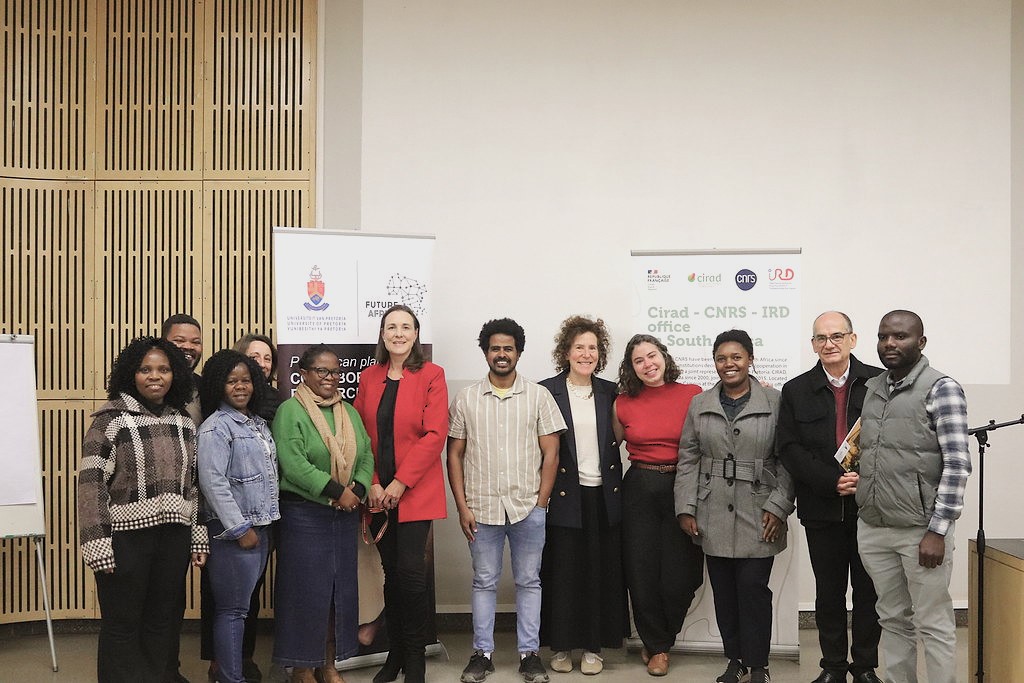
How do bureaucratic systems, legal uncertainty and social exclusion shape the lives of migrant youth? This question was at the centre of a conference hosted by Future Africa at the University of Pretoria, in partnership with the IRD–CNRS–CIRAD Joint Office, on 11 June 2026 as part of the two organisations’ Science-Sharing Series.
Titled The Architecture of ‘stoppedness’: Exploring administrative violence and ontological insecurity through participatory research with migrant youth in South Africa, the conference showcased findings from the South African component of the Growing Up Across Borders (GRABS) project, a five-year international study examining the experiences of migrant and refugee youth across South Africa, France, Greece, the United Kingdom and Canada.
Opening the seminar, Professor Wanda Markotter, Interim Director of Future Africa, highlighted the importance of transdisciplinary research in bringing together researchers from different disciplines and institutions to address complex challenges facing the continent.
The conference featured presentations by researchers Professor Jane Freedman, Dr Glenda Santana de Andrade and Mr Aron Tesfai, with UP Professor Nolwazi Mkhwanazi from the Centre for the Advancement of Scholarship (CAS) serving as discussant.
Introducing the GRABS project, Prof Freedman explained that the research focuses on migrant and refugee youth aged 15 to 25 and adopts a participatory approach that positions young migrants not simply as research participants, but as collaborators in the research process.
Drawing on findings from the project, the researchers described how bureaucratic and administrative barriers, legal uncertainty and social exclusion shape the daily lives of many migrant youth. These intersecting challenges, they argued, create a state of “stoppedness”, in which young people struggle to access opportunities, move forward and imagine stable futures despite their aspirations and resilience.
The researchers also highlighted how participatory methods, including photography, podcasting, storytelling and filmmaking, enable young people to document their experiences while developing new communication and creative skills and contributing directly to the research process.
Responding to the presentations, Prof Mkhwanazi commended the project’s thoughtful use of participatory methods while encouraging the research team to continue reflecting on how the participants’ voices can be centred from the earliest stages of the research design. The discussion acknowledged that while research alone cannot resolve structural inequalities, it can contribute to more ethical and inclusive forms of knowledge production.
Closing the conference, Dr Laurent Vidal, Director of the IRD–CNRS–CIRAD Joint Office, reflected on the value of continuing interdisciplinary conversations on ethical and participatory research, noting that the issues raised extend well beyond migration studies.
The IRD–CNRS–CIRAD Joint Office also published an article on the GRABS project, available here: “Forced Immobility and Young Migrants from the GRABS Project in South Africa”.