You are here: Home1 / Challenge Domains2 / One Health3 / Regional One Health workshop at UP strengthens collaboration on zoonotic...
Regional One Health workshop at UP strengthens collaboration on zoonotic disease surveillance
Key points
- UP through Future Africa and the Centre of Viral Zoonoses hosted a regional One Health workshop to strengthen zoonotic disease surveillance.
- Experts from Southern Africa and the United Kingdom aligned research methods and surveillance approaches.
- The workshop identified key research gaps and developed a roadmap for collaboration.
- The initiative forms part of a SAMRC–UKRI programme to strengthen Africa’s pandemic preparedness.
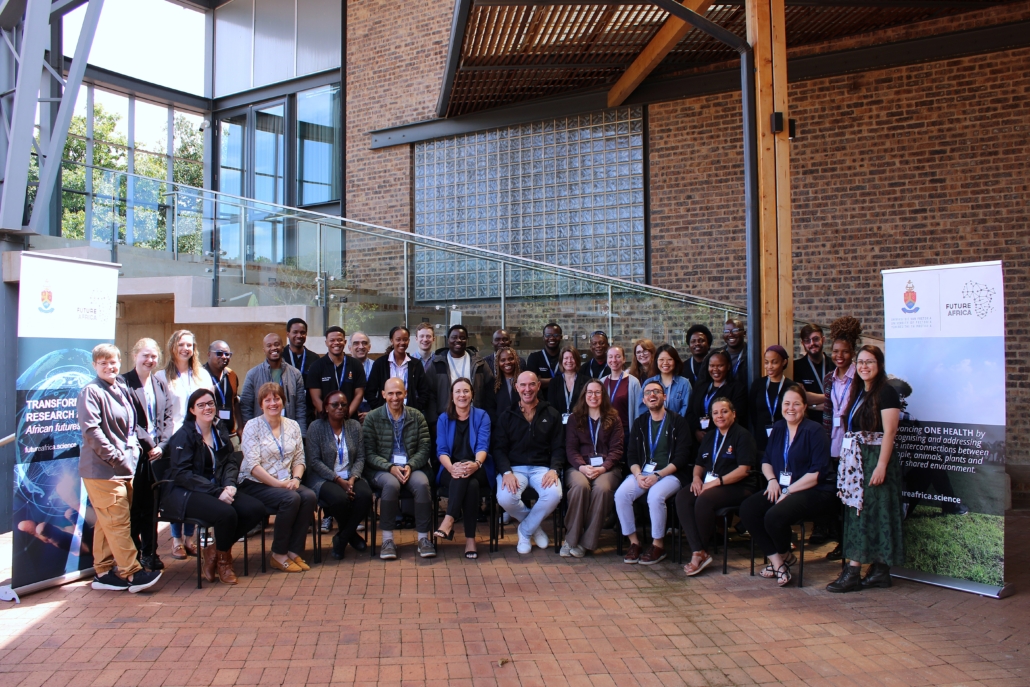
Future Africa platform and the Centre for Viral Zoonoses (CVZ) at the University of Pretoria recently hosted a multidisciplinary One Health workshop to enhance collaboration on zoonotic disease surveillance, laboratory harmonisation and research capacity across Southern Africa.
Held from 16–19 February, the workshop brought together partners from South Africa, Mozambique, Zambia, Zimbabwe and the United Kingdom. Experts in wildlife ecology, virology, taxonomy, biosafety, epidemiology and community engagement participated in discussions to align research methodologies and address shared challenges in cross-border infectious disease research.
The workshop forms part of the South African Medical Research Council (SAMRC)–United Kingdom Research and Innovation (UKRI) collaboration, which Professor Wanda Markotter, Director of the Centre for Viral Zoonoses and Future Africa Research Chair in One Health at UP, leads together with Dr Lorraine McElhinney, UK Principal Investigator from the Animal and Plant Health Agency. Dr Marike Geldenhuys and Dr Marinda de Vries serve as co-investigators.
Strengthening One Health research
Discussions focused on:
- Refining the African One Health framework
- Strengthening community engagement
- Biosafety and biosecurity risk assessments
- Wildlife sampling and taxonomy
- Laboratory standardisation
- Sequencing capacity
- Data management and bioinformatics
These areas support coordinated research at the human–animal–environment interface, where many emerging diseases originate.
Key gaps identified
Experts also identified several research and infrastructure gaps across partner countries, including:
- limited laboratory capacity
- challenges with cold-chain storage and RNA preservation
- the need for stronger assay validation and sequencing capacity
- gaps in standardised metadata reporting
- limited bioinformatics expertise
A roadmap for collaboration
The workshop developed a roadmap to strengthen collaboration across the research network.
Planned actions include:
- harmonising standard operating procedures
- developing shared data-sharing platforms
- implementing laboratory quality-control panels
- organising training webinars and researcher exchange programmes across the network
Strengthening pandemic preparedness
The workshop forms part of a broader three-year SAMRC–UKRI programme launched in March 2025 to strengthen Africa’s capacity to prevent and respond to emerging infectious diseases. Beyond pathogen detection, the programme focuses on strengthening regional research infrastructure, supporting emerging African researchers, and fostering cross-country collaboration.
Within this collaboration, UP serves as a coordinating hub through Future Africa and the CVZ. The university provides key research infrastructure, hosts an integrated surveillance database, and leads framework development, training and capacity-building activities across partner institutions. The initiative also contributes to broader continental and global efforts to strengthen pandemic preparedness, including the goals of the Institute for Pandemic Preparedness and Prevention (IP3).
The four-day workshop concluded with a visit to the Ditsong Museum of Natural History and CVZ, reinforcing the importance of voucher specimens, biobanking and high-containment laboratory facilities in supporting zoonotic disease research and long-term surveillance.